
A theme that has been popping up recently through our travels is an increase of the use of visuals to communicate different thoughts and ideas. This proved to be true as we ventured to Wittenberg, the birthplace of Martin Luther and his 95 thesis. As our tour guide, Alexander, weaved us through the cobblestone streets and buildings, three examples of this visual communications caught our eye.
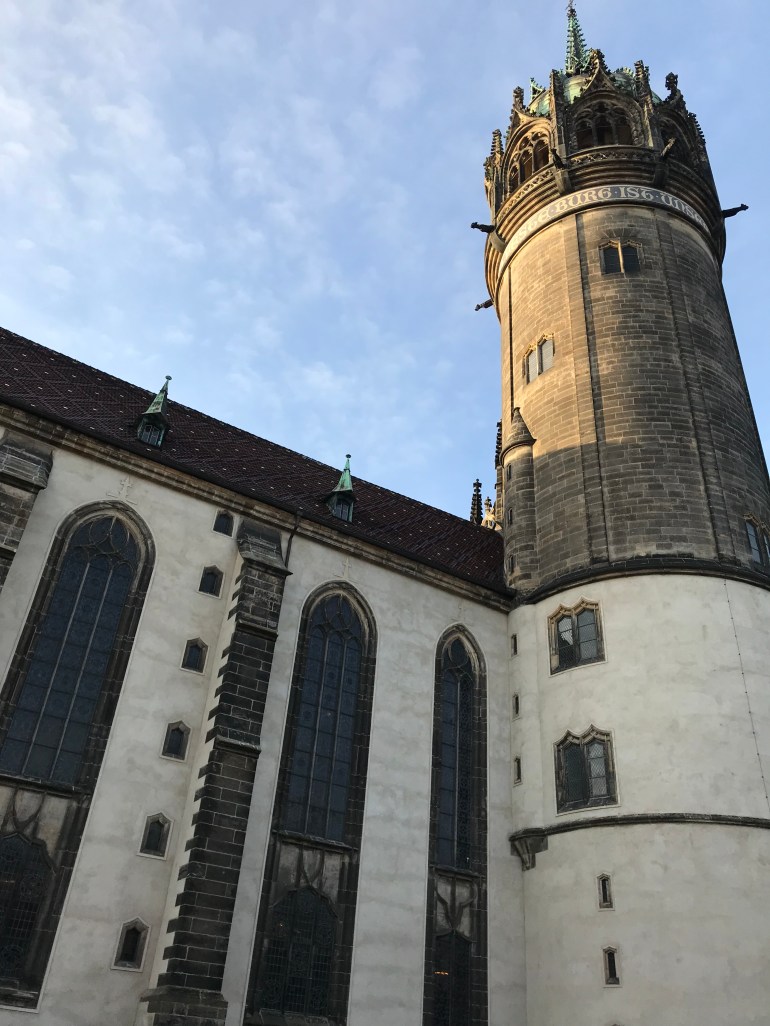
The Castle Church. Consecrated in 1503, and the place where Martin Luther posted his 95 thesis, the Schlosskirche is the center of the Protestant Revolution. This building was renovated in the late 1800s, as the original was destroyed in a fire, and now stands as a fortress to the gates of Wittenberg. This church not only holds an architectural importance, but a strong religious one as well. Martin Luther’s 95 thesis sparked the Protestant Revolution, and being able to visit this church holds great religious meaning.
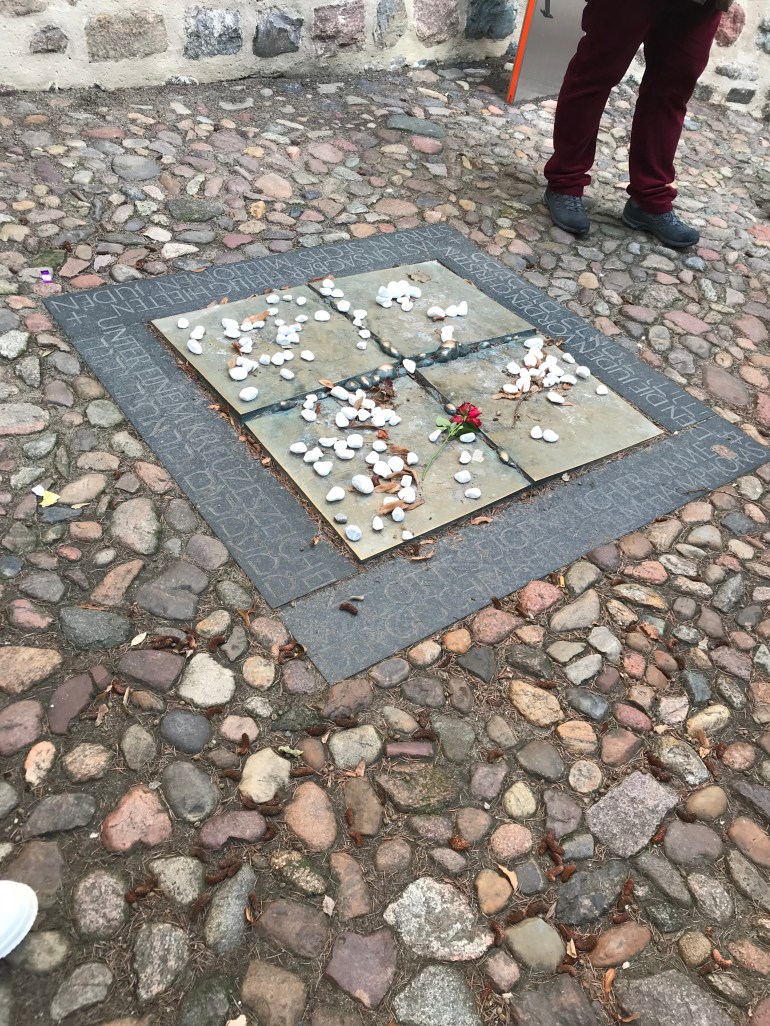
Another instance of visual communication can be seen in this sculpture, near St. Mary’s Church. This sculpture represents the truth being suppressed but, still managing to come out between the cracks in between the four squares. Having something like this sculpture directly under the anti-Semitic building ornamentation, shows that not everyone agrees with what is being displayed above.
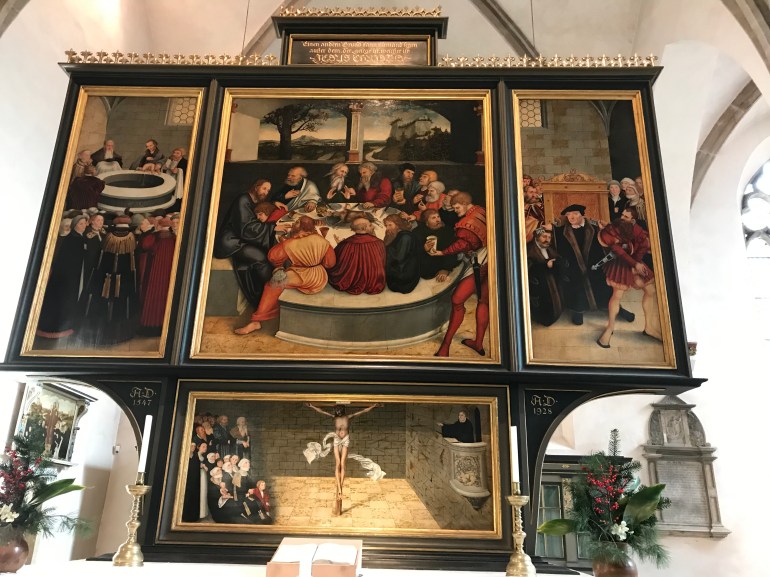
The final example we discovered was through paintings, especially this alter piece in St. Mary’s Church. Our guide Alexander explained how important colors were in the 15th and 16th centuries. For example, the color yellow, which today we associate with happiness, used to symbolize evil. When looking at the top center painting of the last supper, Judas is clearly visible due to his bright yellow clothing, hair, and bag of money. This was a quick visual cue for those traveling to be able to easily identify the evil in paintings. What is cool about this is that even if you can’t speak the same language as someone else, you could understand what the artist was trying to say all thanks to the color palette. Even looking at this last supper, the round table with an opening on the left shows that in heaven everyone is equal and there is no position of power, and the opening shows that anyone can join the table. This way a quick way to spread the main ideals of the Protestant church strictly through a visual.
In conclusion, we very much enjoyed our time in Wittenberg and learned much about Martin Luther. Being able to walk in churches that Luther had preached in and walking the streets that he did, helped us connect to the history we learned about.
– Katie and Emily

